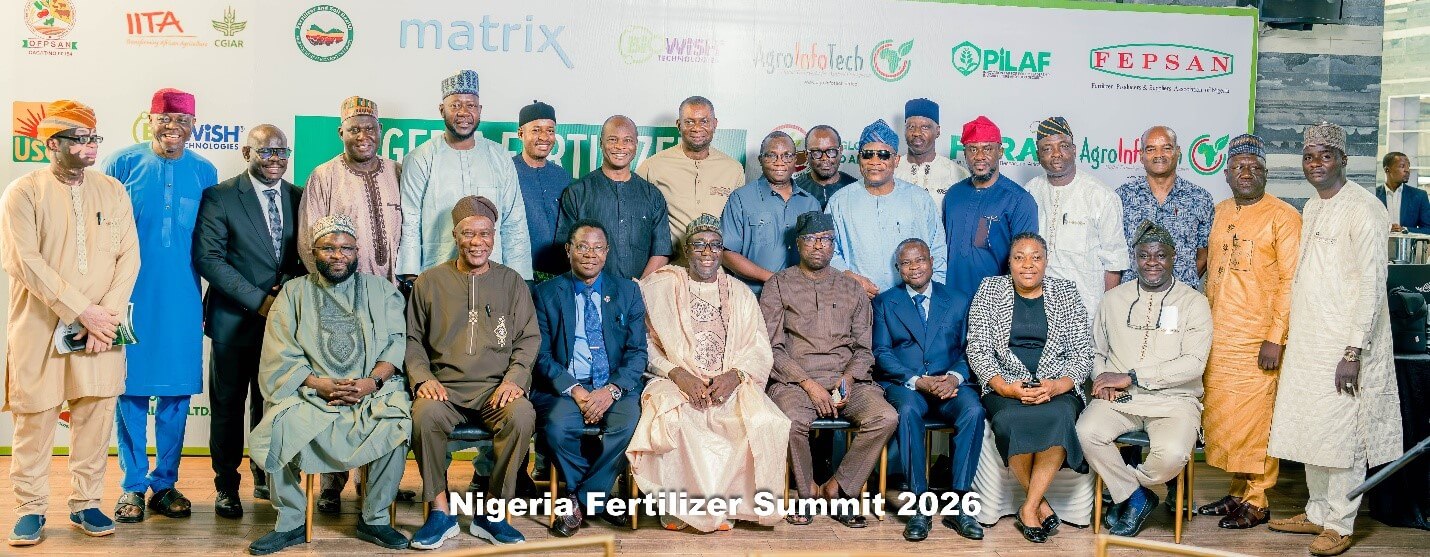
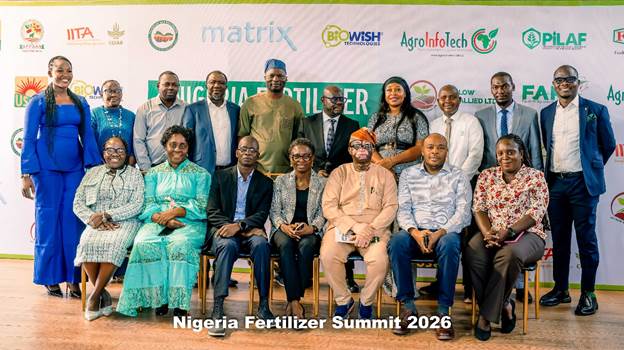
Improving fertilizer access is only part of the challenge facing Nigeria’s agricultural sector. Farmers also need to know which nutrients their soils lack, how much fertilizer their crops require and which recommendations are appropriate for local growing conditions. These questions were central to the 2026 Nigeria Fertilizer Summit in Abuja, themed Phosphorus and Food Security: Challenges in Food Production Systems in Nigeria. The summit brought together policymakers, researchers, fertilizer industry representatives, development partners and farmer organizations to examine how better nutrient management and stronger collaboration can support agricultural productivity and food security.
For the Regional Hub for Fertilizer and Soil Health for West Africa and the Sahel, the discussions underscored a key priority: translating soil data and scientific evidence into practical recommendations that help farmers and agricultural institutions make better decisions.
Why Nigeria Needs Smarter Fertilizer Use
Speakers emphasized fertilizer-use efficiency, balanced nutrient management and site-specific recommendations that reflect local conditions rather than blanket approaches.
Prof. Vincent Aduramigba-Modupe, a soil scientist at the Institute of Agricultural Research and Training (IAR&T) and one of the summit organizers, summed up the principle: “Improving crop productivity is not only about applying fertilizer. It is about ensuring the right nutrient is applied in the right amount, at the right place, and under the right conditions.”
Participants examined how fertilizer recommendations can move beyond generalized approaches and become more responsive to the realities farmers face in different parts of the country.
Why Phosphorus Matters
Phosphorus, the focus of this year’s summit, emerged as a critical nutrient for both agricultural productivity and long-term food security. Speakers highlighted its essential role in plant growth, root development, crop establishment and grain formation, noting that crops cannot achieve their full yield potential without adequate phosphorus.
In his opening address, Prof. Gabriel Oluwatosin, Executive Director of the Institute of Agricultural Research and Training (IAR&T), described phosphorus as a resource that receives too little attention in food-security discussions despite being indispensable to crop production. Unlike nitrogen, which can be manufactured from atmospheric sources, phosphorus is a finite element with no substitute in food production.
Discussions also highlighted concerns about phosphorus availability and use. Participants noted that many agricultural soils in Sub-Saharan Africa have experienced nutrient depletion over decades of cultivation, contributing to low productivity where phosphorus is not adequately replenished. At the same time, global phosphate resources are concentrated in a small number of countries, creating potential supply and price risks for fertilizer-importing nations.
Speakers emphasized that improving phosphorus management is therefore not only a question of increasing fertilizer use, but of using nutrients more efficiently through soil testing, balanced fertilization and site-specific recommendations that reflect local conditions.
The Role of Soil Intelligence
If better decisions are the goal, better information is the foundation.
Discussions returned often to soil intelligence: understanding what soils can supply, what they lack and how nutrients behave under different conditions. Prof. Jibrin Mohammed Jibrin, Visiting Scientist with the Regional Hub for Fertilizer and Soil Health for West Africa and the Sahel and Professor of Soil Science at Bayero University Kano, described soil intelligence as fundamental to achieving food security.
“The basis of food production and food security is the soil. You need a healthy soil to produce well and feed the nation with nutritious food. To do that, you need soil intelligence.”
Turning Soil Information into Practical Recommendations
Soil data are most valuable when they inform decisions. Digital soil maps, laboratory assessments and soil sampling can help identify nutrient constraints and support fertilizer recommendations tailored to specific crops and locations.
The Regional Hub’s work in this area was presented during technical sessions. Dr. Bello Muhammad Shehu, Senior Agronomist at the Hub, outlined efforts to strengthen national soil information systems through enhanced digital soil mapping, new soil sampling campaigns, laboratory assessments and the development of site-specific nutrient recommendations.
The Hub is supporting national soil information systems and enhanced digital soil mapping in Nigeria, Ghana, Liberia, Sierra Leone and Togo, while also contributing to the development of a regional soil information platform. Working with national partners, it is helping to develop site-specific nutrient recommendations that translate soil information into practical fertilizer advice. These recommendations are currently being validated and integrated into AKILIMO 2.0, a digital advisory platform designed to support more informed nutrient-management decisions by farmers and agricultural advisers.
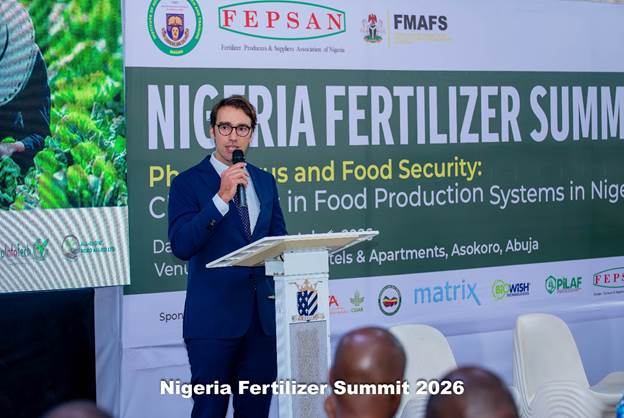
In his goodwill message, Bastiaan Huesken, Director of the Regional Hub for Fertilizer and Soil Health for West Africa and the Sahel, described turning soil evidence into practical use as central to the Hub’s mandate.“The Hub was created to turn soil data into recommendations, and recommendations into products and advice that farmers can use.”
Prof. Jibrin added: “The Hub’s goal is not only to generate soil information, but to ensure it reaches the last mile and supports better decisions for farmers.” Achieving this requires more than generating data. It also depends on laboratory capacity, functioning advisory systems, appropriate fertilizer products and sustained collaboration among research institutions, government agencies and private-sector partners.
Breaking Down Silos
One concern surfaced repeatedly throughout the summit: fragmented efforts. Participants highlighted duplicated work, disconnected interventions and weak coordination among institutions working across the fertilizer and soil health landscape.
Several speakers stressed that addressing soil health and fertilizer challenges requires stronger coordination between government agencies, researchers, fertilizer companies, farmer organizations and development partners.
As Prof. Jibrin noted:
“If we want to achieve our goals, we have to work together. Too many initiatives have been implemented in silos. Real progress will come when stakeholders align, collaborate and follow through on agreed actions.”
He highlighted the role of Nigeria’s National Technical Team (NTT), supported by the Regional Hub, as one mechanism for improving coordination. The NTT serves as an interface between Nigeria and the Hub, helping align national priorities, coordinate technical engagement and support the implementation of agreed actions.
Participants also emphasized the importance of strengthening existing technical working groups and multi-stakeholder platforms to reduce duplication, improve accountability and ensure that commitments translate into measurable progress.
The Hub’s Contribution: Technical Support and Coordination
The Regional Hub supports Nigeria’s own priorities and institutions in two complementary ways.
Technical support: strengthening soil information systems, digital soil mapping, laboratory capacity and the development of locally appropriate nutrient recommendations.
Coordination: helping national institutions, researchers, public agencies and private-sector partners align their work around country priorities, so that efforts complement rather than duplicate one another.
The Hub works through a consortium that includes the International Institute of Tropical Agriculture (IITA), the International Fertilizer Development Center (IFDC), OCP Africa, the International Soil Reference and Information Centre (ISRIC), the African Plant Nutrition Institute (APNI) and Mohammed VI Polytechnic University (UM6P). It also collaborates with National Technical Teams, country focal points and research institutions to support country-led priorities.
This combination of technical support and regional coordination was recognized at the summit by the Honourable Minister of Agriculture and Food Security, Senator Dr. Aliyu Sabi Abdullahi, who noted:
“Our collaboration with the Regional Hub for Fertilizer and Soil Health for West Africa and the Sahel also creates opportunities to leverage regional expertise, technical support and methodologies for site-specific fertilizer recommendations.”
The Vice-Chancellor of Obafemi Awolowo University, Prof. A.S. Bamire, emphasized that improving agricultural productivity requires responsible nutrient management, research, innovation and stronger partnerships.
Huesken also emphasized that the Hub works through national partners and existing institutions rather than prescribing solutions: “Our role is not to dictate solutions, but to support countries in turning soil health evidence into action.”
From Summit Discussions to Practical Action
The summit concluded with resolutions aimed at improving fertilizer-use efficiency and nutrient management in Nigeria. Priority actions included strengthening national soil fertility mapping and fertilizer recommendation programmes, expanding extension support and agro-dealer capacity, improving fertilizer quality monitoring, promoting farmer awareness and demonstration activities, and optimizing digital advisory platforms. Participants also agreed that implementation should be driven through a multi-stakeholder approach involving government, research institutions, industry and development partners.
Several of these priorities align with ongoing efforts under the Nigerian Farmers’ Soil Health Scheme (NFSHS), including the development of the Nigeria Soil Information System (NiSIS), expansion of soil-testing capacity and initiatives to strengthen coordination across institutions.
As Dr. Donald Madukwe, Head of Partnerships in Africa at OCP Africa, observed: “The goal is better fertilizer use, healthier soils, better farm productivity and economies.” For the Regional Hub for Fertilizer and Soil Health for West Africa and the Sahel, the discussions reinforced the importance of turning soil intelligence into practical recommendations and advisory services that help farmers make better nutrient-management decisions. Ultimately, the value of these efforts will be measured by how effectively they translate into healthier soils, improved productivity and more efficient use of agricultural resources.