WHO WE ARE

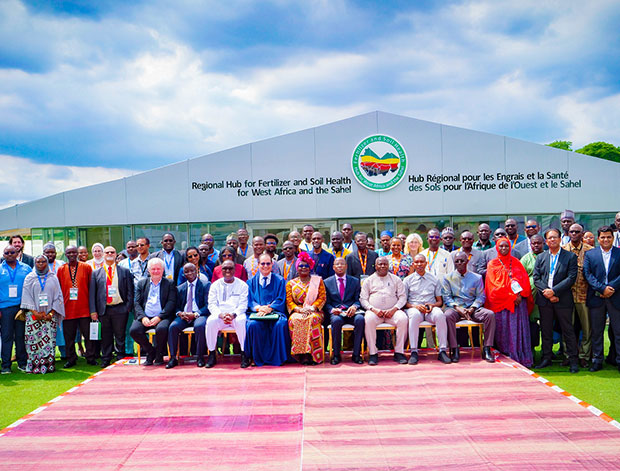
The Regional Hub for Fertilizer and Soil Health is a center of excellence established in 2024 to enable delivery of technical assistance to fertilizer and soil health-related investments in West Africa and the Sahel countries. The Hub provides countries with on-demand support to develop and implement these investments at scale on the ground.

What is the Regional Hub?

The Regional Hub for Fertilizer and Soil Health is a center of excellence established in 2024 to enable delivery of technical assistance to fertilizer and soil health-related investments in West Africa and the Sahel countries. The Hub provides countries with on-demand support to develop and implement these investments at scale on the ground.
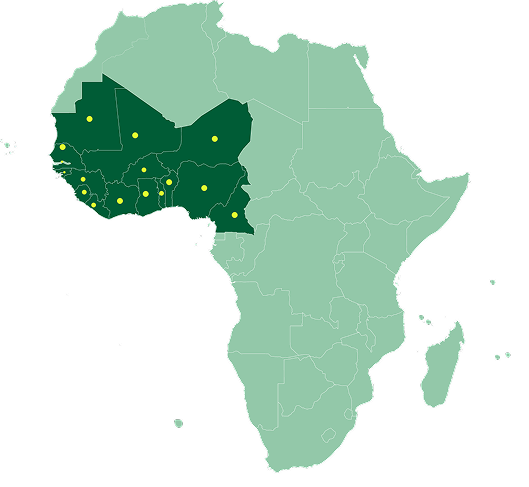
The Hub’s primary objective is to support the development and implementation of investments related to fertilizer and soil for the 17 countries of West Africa and the Sahel. Based on consultations, the Hub provides technical assistance through 20 specific functions. By 2033, the Regional Hub aims to:
  • Increase yields and income for three million farmers
  • Improve soil health for 1.5 million hectares of land
  • Equip 1.5 million farmers to adapt to climate change

The Vision of the Regional Hub is for nations in West Africa and the Sahel to improve long-term soil health and fertility for enhanced yield and profitability, efficient resource use (nutrients, water, labour), and climate resilience, thus contributing to the sustainable transformation of African smallholder agriculture for food security, poverty reduction, and environmental sustainability.

The Mission is to facilitate the delivery of agronomic gain, conceptualized around yield and profitability, resource use efficiency (nutrients, water, labor), climate adaptation, and soil health, at the regional, national, and sub-national level through the assembly, delivery, and monitoring of fertilizer and soil health management practices and related capacity development of key stakeholders, underpinned by institutionalization principles.

What does the Hub do?

Launched in 2024, the Hub’s role is to provide technical assistance for national and regional fertilizer and soil health-related investments in countries of West Africa and the Sahel. The assistance will be delivered through a specialized unit fully equipped with the expertise, tools, and assets necessary to enable the delivery of technical assistance in fertilizer and soil health. As such, the Hub supports the implementation of the African Union Action Plan.

FACT SHEET

Learn more about the hub
insight

The Challenge: Why Action is Critical

Across Africa, farm yields, especially for key crops like maize, remain stubbornly low, often only 1.2–2.2 tons per hectare. These low yields lead to extensive nutrient depletion and major economic losses for the continent.​

Several factors drive this challenge:

  • Nutrient mining from continuous cropping.
  • Limited use of fertilizers and organic amendments.
  • Lack of critical secondary and micronutrients.
  • Soil problems, including compaction and erosion.
  • Generally poor agronomic practices.

African leaders have recognized these barriers. The 2006 Abuja Fertilizer Summit set an ambitious goal: increase fertilizer application rates to 50 kg of nutrients per hectare per year.

While some progress has followed, the region still faces:

  • Persistently low yields and a reliance on food imports.
  • Low fertilizer use efficiency, even as usage has increased.
  • Complexity in matching fertilizer management practices to wide-ranging growing conditions.
  • An urgent need to focus on soil health, given the mounting risks from climate change.

Efforts to manage soil health remain difficult, with no universally accepted success metrics—while policy frameworks often overlook this crucial issue. Addressing these challenges is essential for ensuring food security, sustainable production, and resilient livelihoods across the continent.

Our Solution: The Regional Hub

Recognizing these complexities, a follow-up summit in Nairobi in 2024 focused on fertilizer and soil health, resulting in an action plan. Following a round table organized by ECOWAS and the World Bank in Lomé, the priority action defined in the resulting roadmap was the establishment of this Regional Hub for Fertilizer and Soil Health for West Africa and the Sahel.

Governance and Coordination

Economic Community of West African States (ECOWAS) chairs the Hub Advisory Committee, which comprises the Consortium members, key regional and development partners, and other relevant representatives from associate and national partners.


A Consortium of technical partners, consisting of the International Fertilizer Development Center (IFDC), African Plant Nutrition Institute (APNI), OCP Africa, Mohammed VI Polytechnic University (UM6P), ISRIC – World Soil Information, and the International Institute of Tropical Agriculture (IITA), is responsible for operationalizing the various functions.

A Steering Committee, consisting of the above Consortium partners, is the final decision making body of the Hub.

Daily coordination of Hub activities is led by IITA, which hosts a secretariat overseeing day-to-day management, communication, and coordination among partners and country focal points. Technical Working Groups bring together experts to guide the operationalization of the above thematic clusters. National Focal Points for the target countries, supported by National Technical Teams, lead in-country operations.


Consortium Partners and Roles The Consortium comprises leading organizations with recognized expertise in soil health and fertility, including IITA/CGIAR, APNI, ISRIC, IFDC, UM6P, and OCP Africa. The consortium members: • Implement or support the implementation of activities agreed upon by the countries through national entities. • Provide technical and scientific expertise to the Hub and allocate activities.


These partners collectively possess the capacity to deal with all aspects of fertilizer and soil health. Through consultation, 20 specific functions were identified where the Hub provides critical technical assistance. Crucial financial support for the operational mechanism is currently provided by the World Bank via the Accelerating Impacts of CGIAR Climate Research for Africa (AICCRA) program and OCP Africa.
Our Operational Model

The Hub’s operational model is designed for efficiency and rapid deployment, often compared to a car workshop. The hub will establish a fully-equipped unit—our “workshop”—with the necessary expertise, tools, and assets, investing our resources upfront. When a specific country requires technical assistance for their ongoing or upcoming fertilizer and soil health-related investments, they call upon the Hub. This model ensures high responsiveness.

Countries cover in-country operational costs, much like paying for repairs without owning the garage. They engage local technical staff, co-develop workplans, jointly implement activities like training, and provide ongoing support to national partners during scaling.

Our Team

Meet the TEAM